Franklin, Tennessee
The Last Thing He Told MeFranklin, Tennessee, is where Hannah Hall’s grandfather largely raised her, providing the dependable home life her parents did not. The place is associated with the daily care and woodworking that shaped Hannah’s childhood and later informed her own profession as a woodturner.
Family history and caregiving
Hannah’s father, a photographer who traveled for work 280 days a year, spent his time off at his family’s ranch in Sewanee rather than making the two-hour drive to her grandfather’s house in Franklin. Hannah barely knew him. Her mother, Carole, was also largely uninterested in raising her. Shortly after Hannah’s sixth birthday, her father left Carole for his assistant; Carole pursued him until he took her back, then left Hannah with her grandfather full-time.
Hannah later understood her mother’s departure as painful but clarifying: it made plain that there was nothing Hannah could have done to make Carole stay. In Franklin, by contrast, her grandfather offered stability and kindness. Hannah recalls being happier after Carole’s exit, not because the loss did not hurt, but because the home her grandfather provided was dependable.
A home shaped by routine and craft
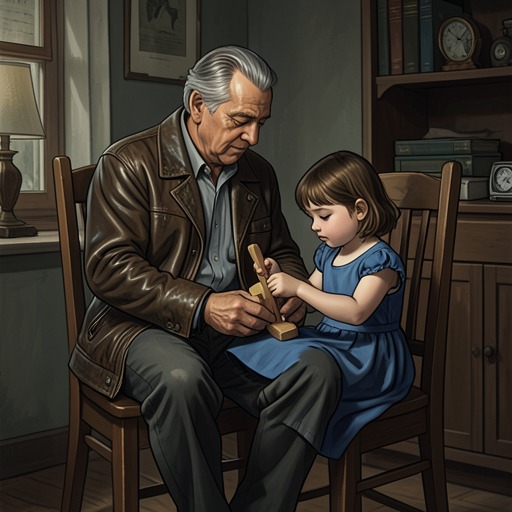
Her grandfather made Hannah dinner every night and waited until she had finished before announcing that it was time to get up and read stories before bed. He also let her watch him work. His woodworking was not incidental to her life in Franklin: he was an excellent woodturner, and his work had been central to Hannah’s experience for as long as she could remember.
She watched him place enormous pieces of wood on a lathe and transform them into something beautiful—or, when the result fell short, find a way to begin again. When a piece needed a different approach, he would acknowledge that and work out another way forward. The workshop thus offered Hannah both a close view of skilled labor and a recurring example of how to respond when a first attempt failed.
Lasting significance
Hannah describes her own work as sculpting wood, a profession she inherited naturally from the example of her grandfather. Her account does not cast his work as a simple promise that every difficulty can be fixed. Instead, what she took from watching him was the distinction between changing one’s approach and abandoning what matters: some things must be met from different angles, but the necessary work must continue wherever it leads. Franklin’s significance in her story rests in this conjunction of place, care, and practice—the home where she was raised and where a lasting principle took shape.